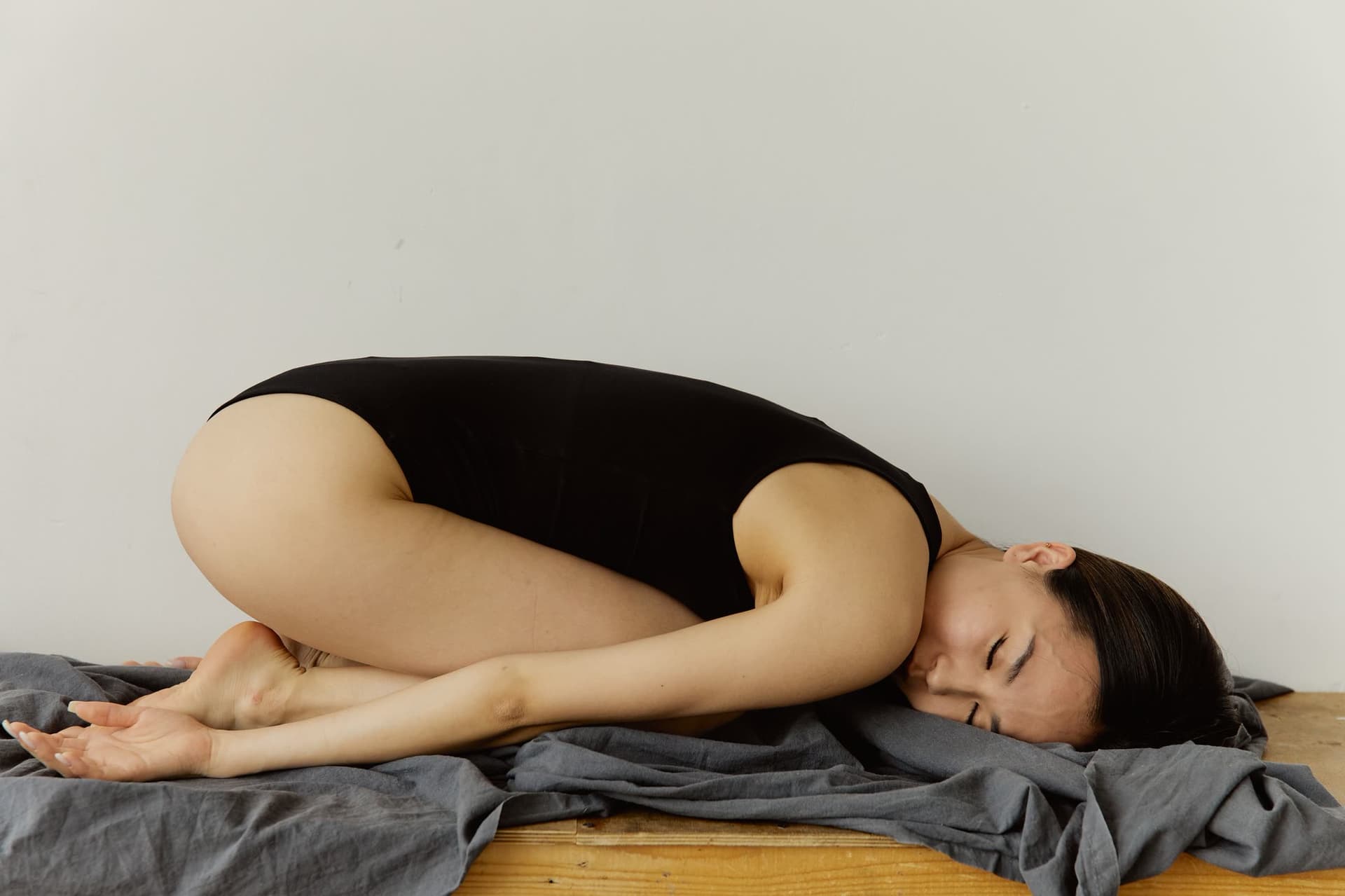
At the end of every Sivananda class, everyone lies down, closes their eyes and… does nothing. For beginners this is often the most awkward moment: the mind lists everything still to do, hands and feet fidget, and the feeling of “wasting time” is very loud.
That is exactly why Savasana — the relaxation pose — is one of the five foundational points, alongside movement and breath. Relaxation does not just happen. It is practised.
Three levels of relaxation
The Sivananda tradition describes relaxation at three levels: physical, mental and deeper still. As a beginner, start with the first — letting the body truly release — and notice whether the mind follows.
A 10-minute Savasana
- Lie on your back on a mat or bed, feet hip-width apart, letting them fall open.
- Rest your arms a little away from your body, palms facing up.
- If your lower back is uncomfortable, place a pillow under your knees. Cover yourself with a light blanket — the body often cools as it relaxes.
- Take a few slow breaths, letting the out-breath be slightly longer.
- Bring attention to each area in turn: feet, calves, thighs, hips, belly, back, chest, hands, arms, shoulders, neck, jaw, eyes, forehead. For each, silently say “let go”.
- Rest for a few minutes, letting the breath be natural.
- To finish, move your fingers and toes gently, roll to one side and sit up slowly.
If you fall asleep in Savasana, that is fine. Perhaps your body needed it.
Common difficulties
- The mind will not stop. Normal. Each time you notice thinking, gently return to the body part you were on.
- Guilt about “doing nothing”. Treat these ten minutes as part of your schedule, an appointment with yourself.
- No time. A three-minute version still counts: lie down or lean back in a chair and release only your shoulders, jaw and eyes.
What research notes
NCCIH reports that guided relaxation techniques such as body scans and progressive muscle relaxation are generally safe and may support a sense of calm in healthy people. Reviews also note that yoga — including its closing relaxation — may help with stress management, although study quality varies. Savasana is therefore a self-care practice, not a medical therapy.
A safety note
Some people, especially those who have experienced trauma, may feel uneasy lying still with their eyes closed. You can keep your eyes open, sit instead of lie down, or stop at any time. If unease persists, please talk with a mental-health professional.
Sources
- 1Relaxation Techniques: What You Need To Know — NIH National Center for Complementary and Integrative Health · accessed 3 November 2026
- 2Yoga: Effectiveness and Safety — NIH National Center for Complementary and Integrative Health · accessed 3 November 2026
- 3Năm Điểm Yoga — Sivananda Yoga Việt Nam · accessed 3 November 2026
- 4Mindfulness — NHS · accessed 3 November 2026
This article is lifestyle education and does not replace medical diagnosis or advice. If you have persistent symptoms or are under treatment, talk with your doctor.