When people hear “Sivananda yoga”, many picture a ninety-minute class, chanting and headstands. That is part of the truth. But the core is much simpler: five points that Swami Vishnudevananda — a disciple of Swami Sivananda — distilled so that anyone could bring yoga into everyday life.
This article is not trying to turn you into a renunciate. It asks a practical question: with back-to-back meetings, young children and exhausted evenings, what do those five points actually look like?
A little history
Swami Sivananda (1887–1963) founded an ashram in Rishikesh, India, and wrote hundreds of books on yoga and Vedanta. In 1957 he sent his disciple Swami Vishnudevananda to the West; two years later the International Sivananda Yoga Vedanta Centres were founded in Canada. It was Vishnudevananda who organised yoga into five points so that busy city people could practise.
In Vietnam, the Sivananda centre in Hanoi still teaches that structure. Ananta is an independent practice inspired by the tradition — we borrow the frame and translate it into the language of a working day.
1. Proper exercise (Asana)
The spirit of asana is not flexibility but regularity and attention. A short sequence done daily is worth more than a long session once a month.
- Ten minutes in the morning: stretch, fold forward gently with soft knees, twist while seated.
- After every hour at the computer: stand up, drop your shoulders, walk for a few minutes.
- At the weekend, if there is time: one slow round of sun salutation.
The World Health Organization recommends that adults do around 150–300 minutes of moderate physical activity a week, and stresses that some activity is better than none. Gentle yoga, a walk around the lake and taking the stairs all count.
2. Proper breathing (Pranayama)
Most of us breathe shallowly and quickly, high in the chest — especially when rushed. Pranayama starts by noticing that.
Try the “full yogic breath”: inhale slowly through the nose, letting the belly rise gently and then the chest; exhale a little more slowly, in reverse. Three to five minutes is enough. Strong techniques such as Kapalabhati are best learned in person with a teacher, not from a video.
3. Proper relaxation (Savasana)
The Sivananda tradition treats relaxation as a skill to be practised, not just lying down. In Savasana you notice and release each part of the body in turn, from the feet to the face.
Rest is not a reward for finishing everything. It is part of living well.
For busy people, ten minutes of guided relaxation before bed, or three minutes with your eyes closed at lunch, is a realistic place to start.
4. Proper diet
The Sivananda tradition encourages a simple, fresh, moderate vegetarian diet. You do not need to become vegetarian to use the spirit of it. A Vietnamese family meal with plenty of vegetables, fish or tofu, little fried food and a light hand with salty dipping sauce is already close to the idea. How you eat matters just as much: sit down, eat slowly, keep regular mealtimes and stop when comfortably full.
5. Positive thinking and meditation (Vedanta & Dhyana)
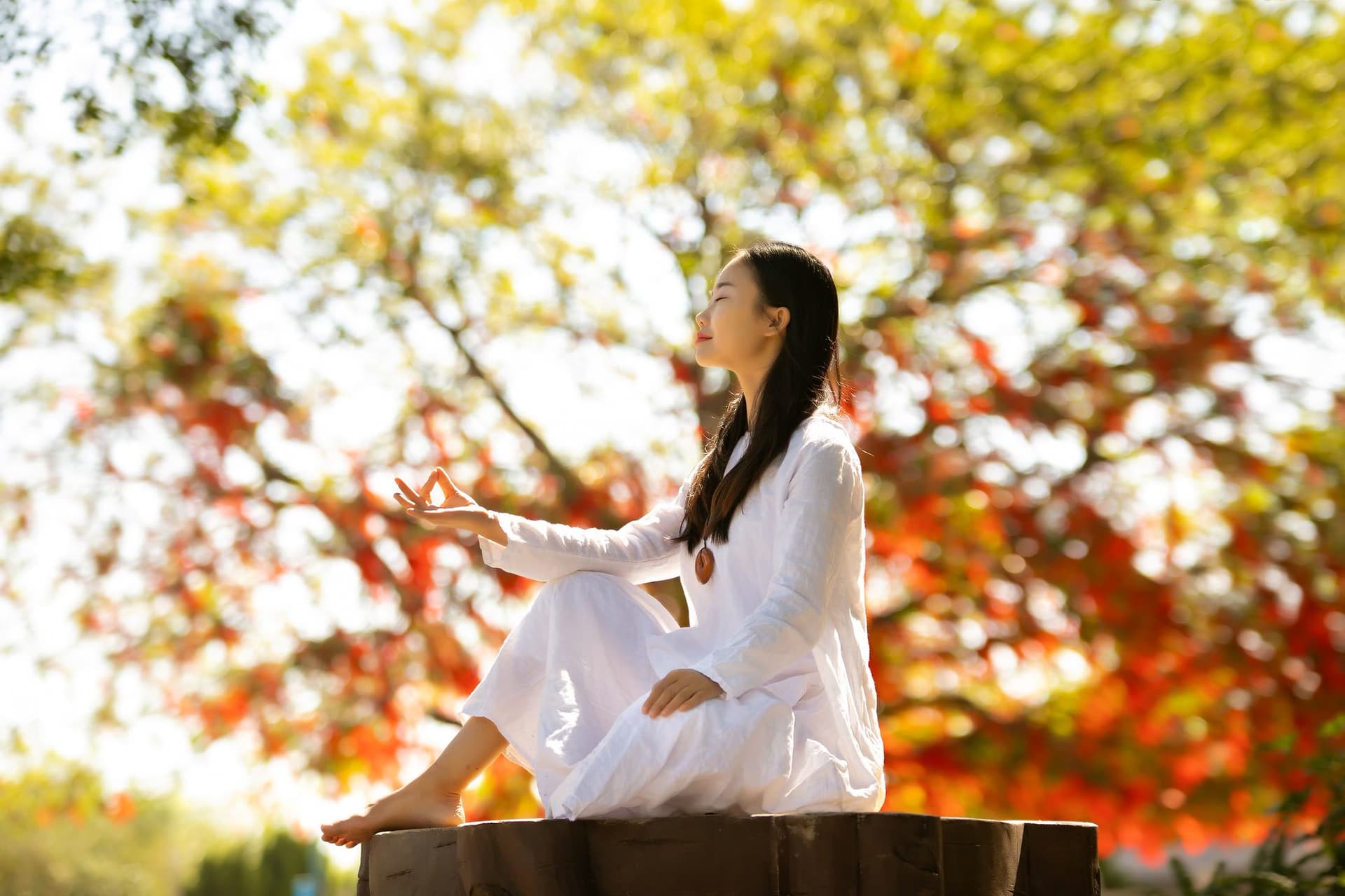
“Positive” does not mean forcing cheerfulness. It is the habit of noticing the stream of thought and choosing to return to the breath instead of being carried away. Two quiet minutes each morning, before you open your phone, is enough meditation for a beginner.
Putting the five points into one day
- Morning: two minutes with your breath, then ten minutes of gentle movement.
- Midday: a three-minute pause with slow breathing between two meetings.
- Dinner: a balanced meal, eaten slowly, without screens.
- Before bed: ten minutes of relaxation lying down.
You do not need all four in the first week. Pick one, practise it for seven days, then add the next.
When to check with a doctor
If you are pregnant, have heart, blood-pressure or spinal concerns, have recently had surgery or have symptoms that have not been assessed, talk with your doctor before starting a new movement program. Yoga is a lifestyle practice, not a medical therapy.
Sources
- 15 Points of Yoga — Sivananda Yoga Vedanta Centres (sivananda.org) · accessed 3 November 2026
- 2Lineage — Sivananda Yoga Vedanta Centres (sivananda.org) · accessed 3 November 2026
- 3Năm Điểm Yoga — Sivananda Yoga Việt Nam · accessed 3 November 2026
- 4Physical activity — fact sheet — World Health Organization · accessed 3 November 2026
- 5Yoga: Effectiveness and Safety — NIH National Center for Complementary and Integrative Health · accessed 3 November 2026
This article is lifestyle education and does not replace medical diagnosis or advice. If you have persistent symptoms or are under treatment, talk with your doctor.