The sun salutation (Surya Namaskar) is the familiar warm-up of a Sivananda class: twelve linked movements, each paired with a breath. Done slowly, it feels more like moving meditation than exercise.
On social media you will see fast, flexible versions with palms flat on the floor. Forget them. The version below is for your body today — after years at a desk.
Before you begin
- Practise on an empty stomach, or at least two hours after a light meal.
- A non-slip mat and comfortable clothes.
- The golden rule: knees may always bend, and no movement should hurt.
Twelve steps, the gentle version
- Stand with palms together at your chest. Breathe out.
- Reach your arms up, leaning back slightly within a comfortable range. Breathe in.
- Fold forward, knees soft, hands on your shins or knees. Breathe out.
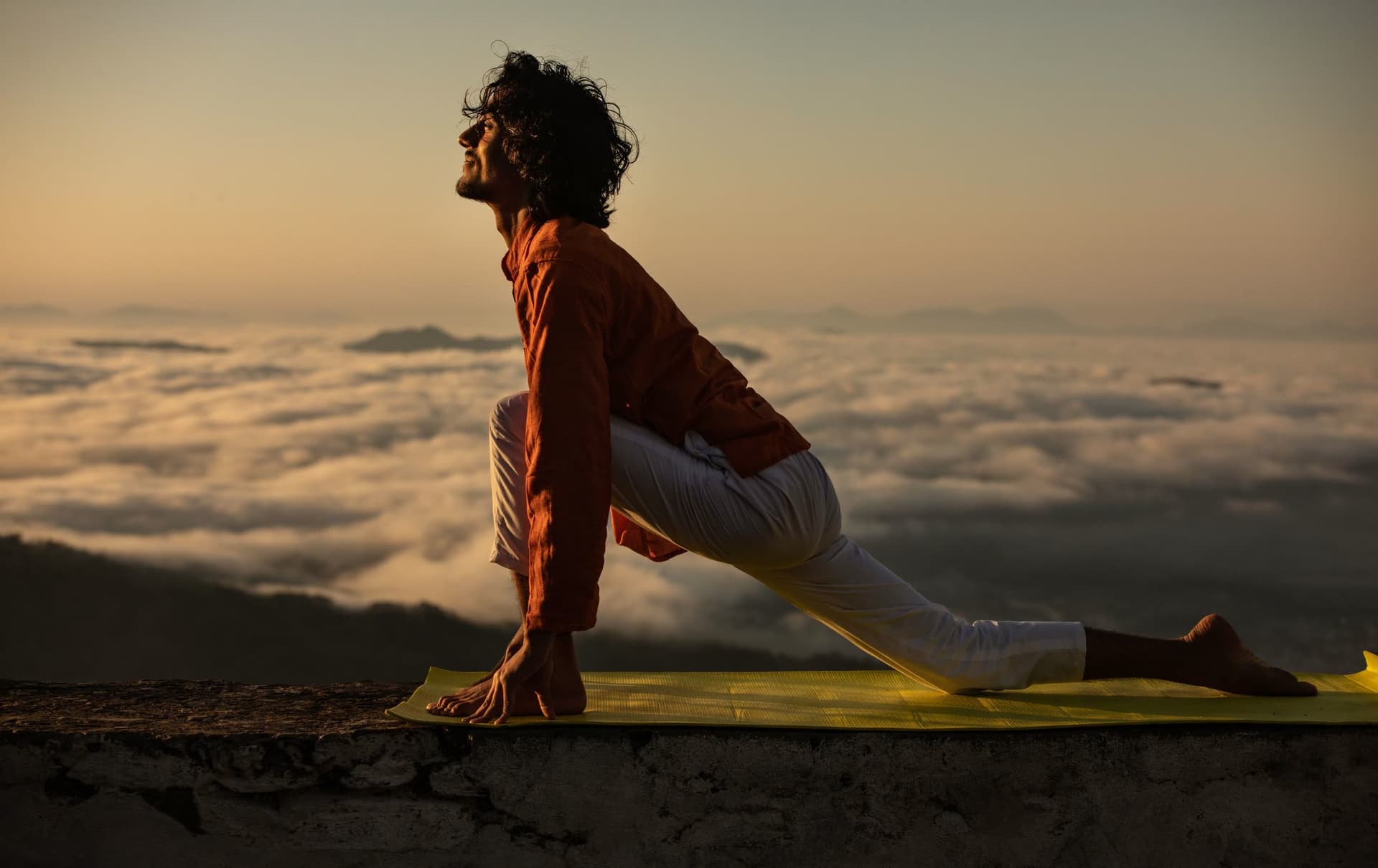
- Step the right foot back into a lunge, lowering the back knee to the mat if you like. Breathe in.
- Step the left foot back, resting both knees on the mat instead of holding a plank. Pause gently or breathe normally.
- Lower down: knees, chest and chin to the mat, hips slightly raised. Breathe out.
- Small cobra: slide forward and lift the chest a little, elbows bent. Breathe in.
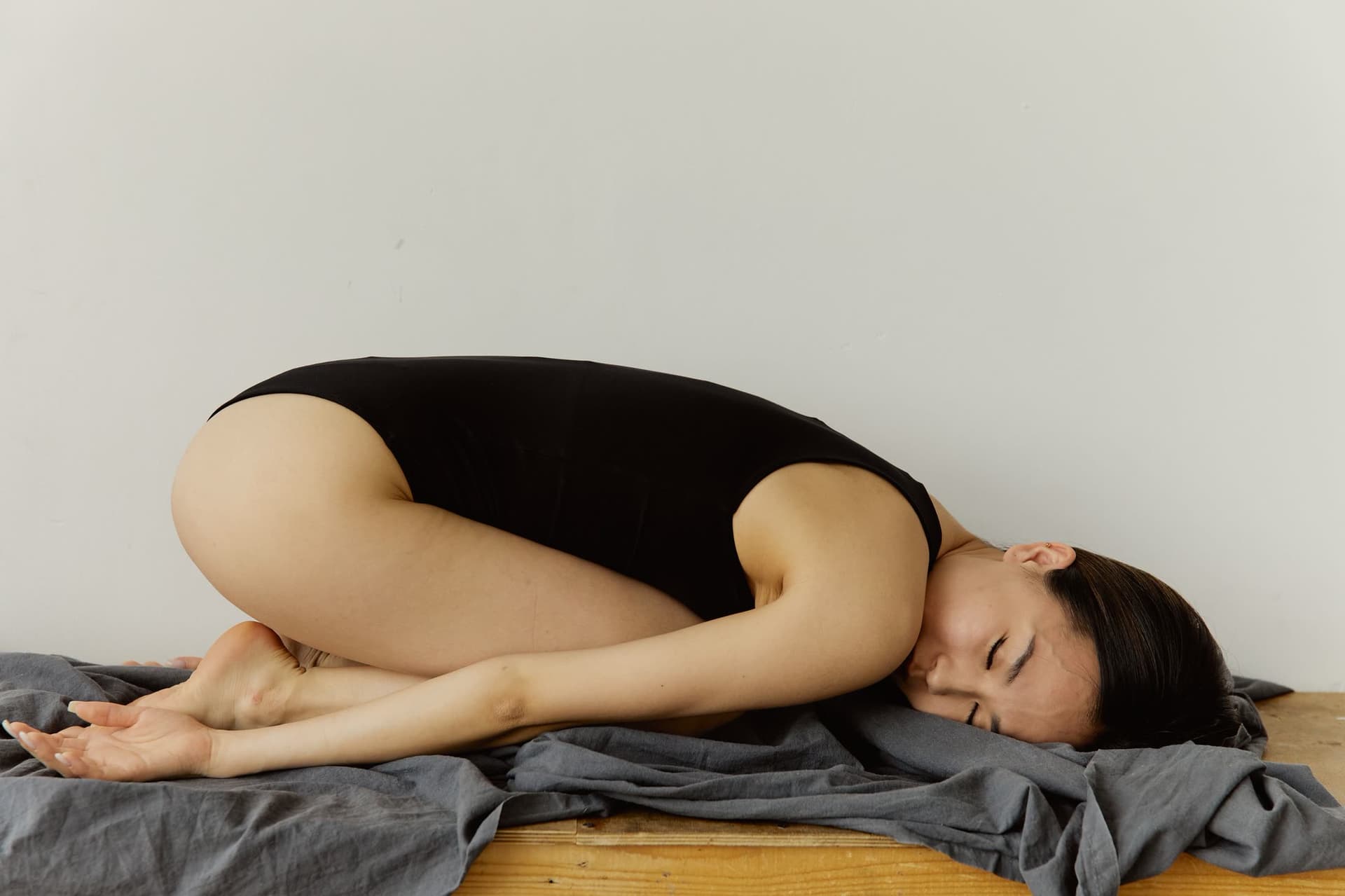
- Downward dog with deeply bent knees, or sit back into child’s pose. Breathe out.
- Step the right foot forward between your hands (help it with a hand if needed). Breathe in.
- Bring the left foot forward and fold, knees soft. Breathe out.
- Roll up slowly to standing and reach your arms up. Breathe in.
- Bring your hands back to your chest. Breathe out.
Repeat, this time leading with the left leg. Two rounds are plenty for the first week.
Sun salutation is not a competition. Two slow rounds today are enough.
Common mistakes
- Holding your breath under effort. If you cannot breathe, you are past your limit — reduce the range.
- Locking the knees in forward folds. Keep them soft, especially if your lower back is tight.
- Rushing to finish. Each movement should last one slow breath.
How much is enough?
The NHS and CDC suggest that adults aim for around 150 minutes of moderate activity a week, plus muscle-strengthening activities on at least two days. A few rounds of sun salutation each morning can be a small part of that total, alongside walking, cycling or taking the stairs.
When to stop and check with a doctor
Stop straight away if you feel dizzy, chest pain, breathlessness or sharp joint pain. If you have blood-pressure, heart, spinal or knee concerns, are pregnant or have recently had surgery, check with your doctor before practising, and learn in person with a teacher who can adapt the sequence for you.
Sources
- 112 Basic Asanas — Sivananda Yoga Vedanta Centres (sivananda.org) · accessed 3 November 2026
- 2Yoga for Beginners: A Complete Guide to Sivananda Yoga — Sivananda Yoga Việt Nam · accessed 3 November 2026
- 3Physical activity guidelines for adults aged 19 to 64 — NHS · accessed 3 November 2026
- 4Adult Activity: An Overview — Centers for Disease Control and Prevention (CDC) · accessed 3 November 2026
- 5Yoga: Effectiveness and Safety — NIH National Center for Complementary and Integrative Health · accessed 3 November 2026
This article is lifestyle education and does not replace medical diagnosis or advice. If you have persistent symptoms or are under treatment, talk with your doctor.