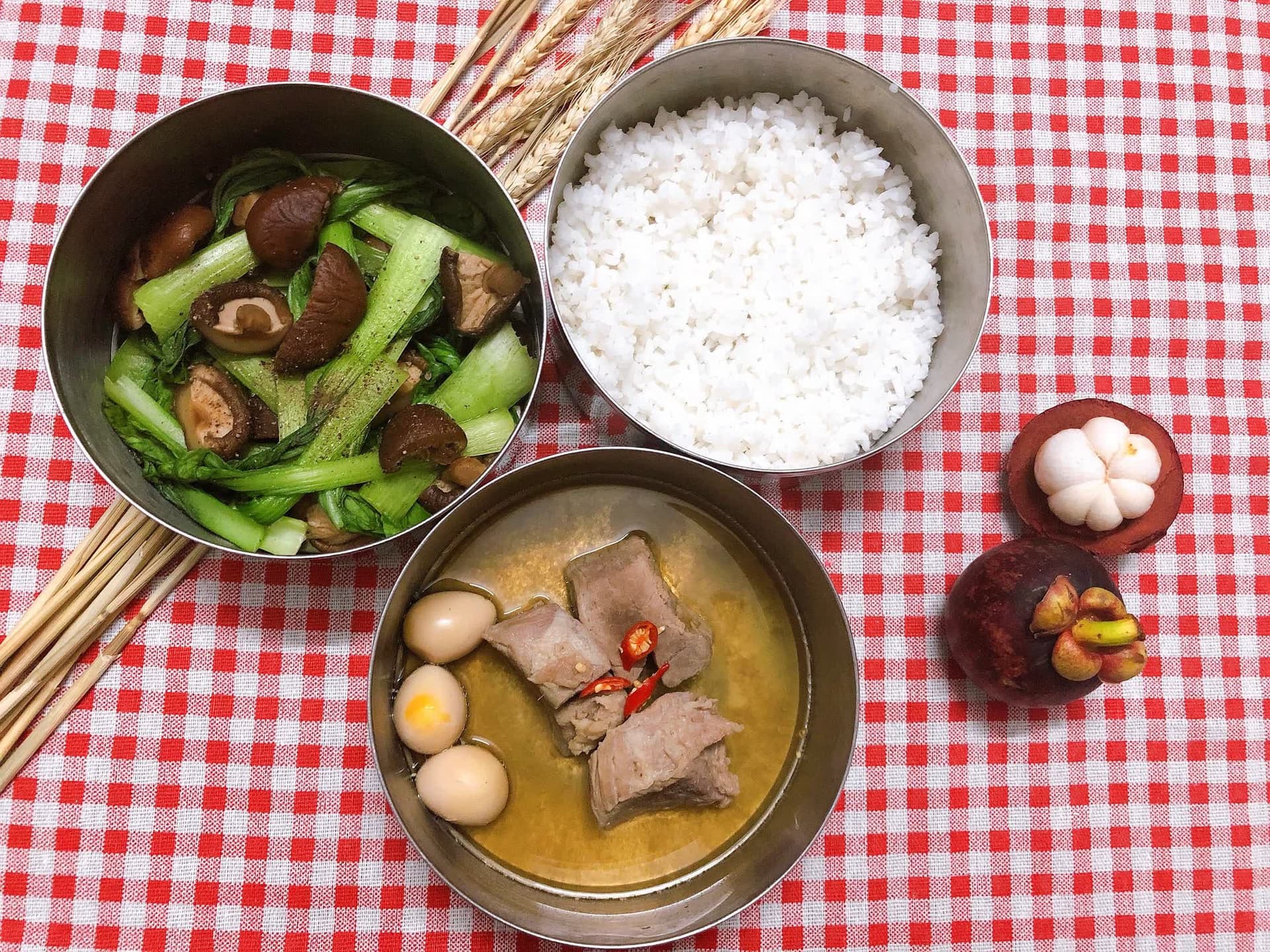
Vietnamese families have something many food cultures envy: the shared family meal. Rice, one protein dish, a bowl of soup, a plate of greens — that structure is already very close to what modern dietary guidance describes. For busy people the problem is rarely a lack of knowledge; it is meals that get cut short, pushed late or replaced by fast food.
What does Vietnam’s Ministry of Health advise?
In 2024 the Ministry of Health published “Ten tips for sensible nutrition to 2030”. Several are easy to bring to the daily table:
- Eat a wide variety of foods, combining several food groups at every meal.
- Eat plenty of vegetables and ripe fruit.
- Favour fish, poultry, beans and nuts.
- Drink enough water every day.
- Limit fried, salty and sugary foods and sugary drinks.
- Make family meals a priority, and stay regularly active.
The World Health Organization likewise recommends at least 400 grams of fruit and vegetables a day and keeping salt under 5 grams, noting that in many Asian countries much of the salt comes from condiments such as fish sauce and soy sauce.
A “balanced tray” for busy days
Think in proportions rather than counting calories:
- Half vegetables: a plate of boiled or stir-fried greens, plus fresh herbs and a vegetable soup.
- A quarter protein: fish, tofu, eggs, chicken, prawns or beans.
- A quarter starch: rice (perhaps mixed with brown rice), noodles or sweet potato.
- Dipping sauce on the side, used lightly: one small bowl for the whole table instead of pouring it over food.
There are no absolutely “good” or “bad” foods. There are balanced meals, and there are days we do a little better than yesterday.
Eating slowly is part of eating well
The Sivananda tradition, like many Asian traditions, cares about how we eat as much as what we eat. A few suggestions:
- Sit at the table and switch off screens for at least one meal a day.
- Take three slow breaths before picking up your chopsticks.
- Put your chopsticks down between mouthfuls and chew a little longer than usual.
- Stop when comfortably full rather than when overfull.
Three busy-life situations
- Office lunch: when ordering a rice box, add a portion of greens and go easy on salty or sweet sauces.
- Late home: keep washed greens and a simple protein (eggs, tofu) ready for nights when you have only fifteen minutes.
- Dinners and business meals: eat slowly, alternate with plenty of water, and return to your usual rhythm at the next meal — no need to “make up for it” by skipping food.
About vegetarian eating
The Sivananda tradition encourages a vegetarian diet. If you would like to try it, start with one or two vegetarian meals a week with enough tofu, beans and nuts to keep the meal complete. If you want to be fully vegetarian long-term, talk with a dietitian.
When to see a professional
Ananta does not design diets for medical conditions. If you have a chronic condition, are pregnant, have a history of disordered eating or need to change your diet for health reasons, please see a doctor or a clinical dietitian.
Sources
- 1Bộ Y tế công bố “Mười lời khuyên dinh dưỡng hợp lý đến năm 2030” — Báo Điện tử Chính phủ · accessed 3 November 2026
- 2Healthy diet — fact sheet — World Health Organization · accessed 3 November 2026
- 3Cách đọc nhãn dinh dưỡng và xây dựng chế độ ăn hợp lý — Viện Dinh dưỡng Quốc gia · accessed 3 November 2026
- 4Eat well — NHS · accessed 3 November 2026
This article is lifestyle education and does not replace medical diagnosis or advice. If you have persistent symptoms or are under treatment, talk with your doctor.